Interior design styles: 8 common styles and how to choose yours
Eight interior design styles worth knowing are Scandinavian, Japandi, minimalism, modern classic, loft or industrial, wabi-sabi, mid-century modern and quiet luxury. They differ in materials, colours and amount of furniture. In Riga the flat itself often makes the choice: the small rooms of a panel block suit simple, light styles with little furniture, while classic and quiet luxury feel natural in the historic centre.
Author: Valerija Gelfere, interior designer · Updated
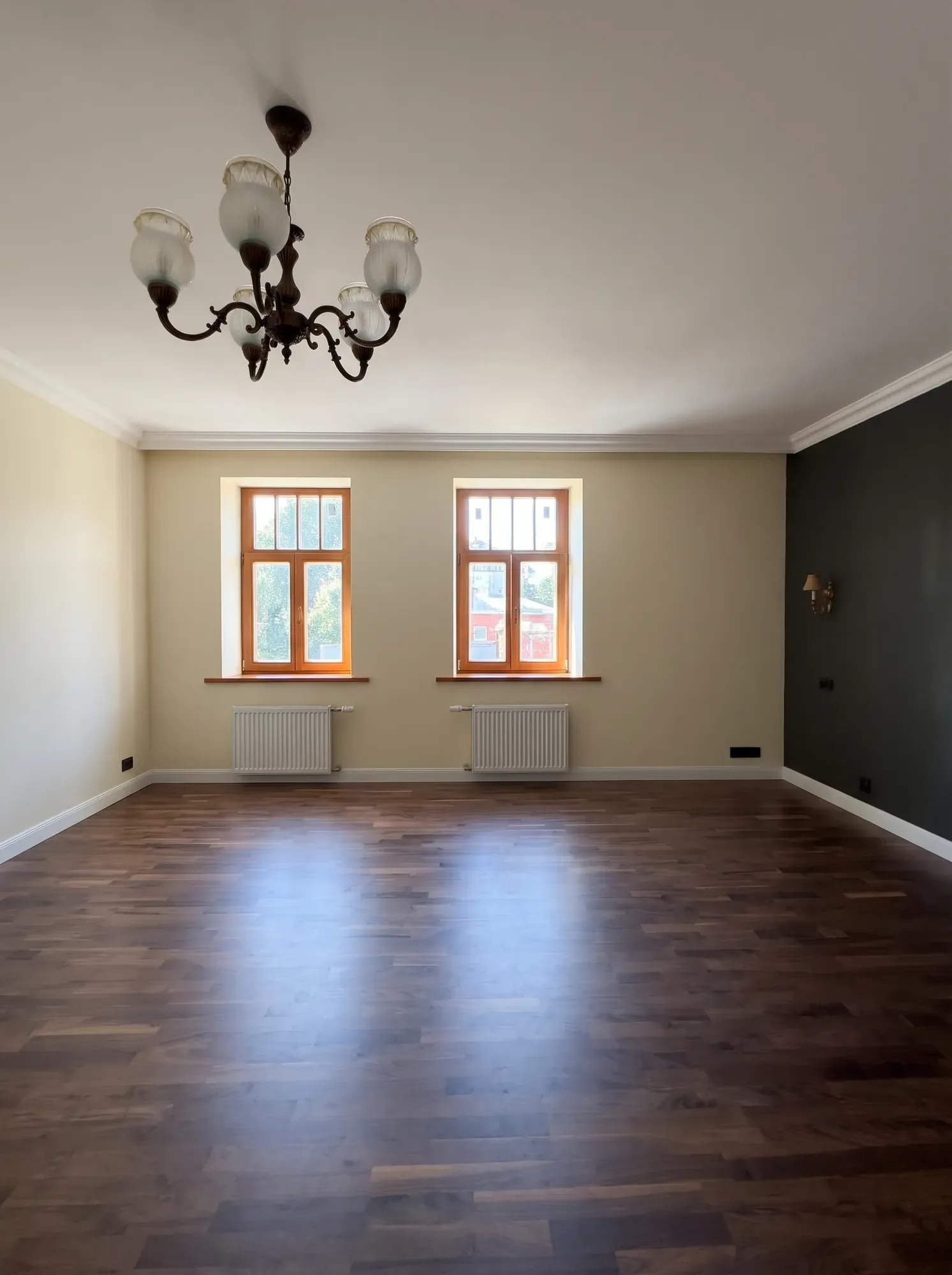
What are the main interior design styles
A style is not a rulebook but a shared language for materials, colours and shapes. Once you have chosen one, hundreds of small decisions, from tiles to cabinet handles, become easier.
The eight styles worth knowing:
- Scandinavian: simple, functional, nothing superfluous
- Japandi: Japanese minimalism with Scandinavian practicality
- minimalism: little furniture, plenty of free space and daylight
- modern classic or neoclassical: symmetry, mouldings, parquet
- loft or industrial: brick, concrete, metal, exposed pipes
- wabi-sabi: beauty in imperfection, rough wood, clay, stone
- mid-century modern: clean lines and mid-20th-century furniture
- quiet luxury: restrained colours, natural materials, no logos
Scandinavian style and minimalism: simplicity that works
Scandinavian design is built on simplicity, minimalism and functionality. It flourished in the 1950s; the Design in Scandinavia exhibition (1954) dates from that period. Every object earns its place, and decoration never gets in the way.
Minimalism goes further: simple natural materials, neutral colours, a minimum of furniture, empty space and natural light. Free space is part of the design, not a gap.
Who it suits: both styles work well in panel blocks, where rooms are small, corridors narrow and ceilings low. Less furniture and floor-to-ceiling storage give a room air. The most common mistake is a cold, empty room: without wood, textiles and warm light, minimalism looks unfinished.
Japandi and wabi-sabi: the calm of Japan and the North
Japandi blends Japanese minimalism and Scandinavian functionality. Its materials are wood, bamboo, rattan, stone, ceramics and linen. The palette is white, grey, beige and brown with black accents, the furniture is low and simple, and the principle is less but better. Dezeen's designers also list the blend of Eastern restraint and Western modernism among the 2026 trends.
Wabi-sabi is the Japanese idea of beauty in imperfection: rough wood, clay and stone, muted earthy colours and asymmetry. Where Japandi is ordered and clean, wabi-sabi happily accepts a crack in a ceramic bowl or uneven plaster.
Who it suits: Japandi fits both a panel-block flat and a historic building, because it needs little furniture and plenty of natural materials. Wabi-sabi needs good daylight to show its texture.
Modern classic and neoclassical: symmetry and mouldings
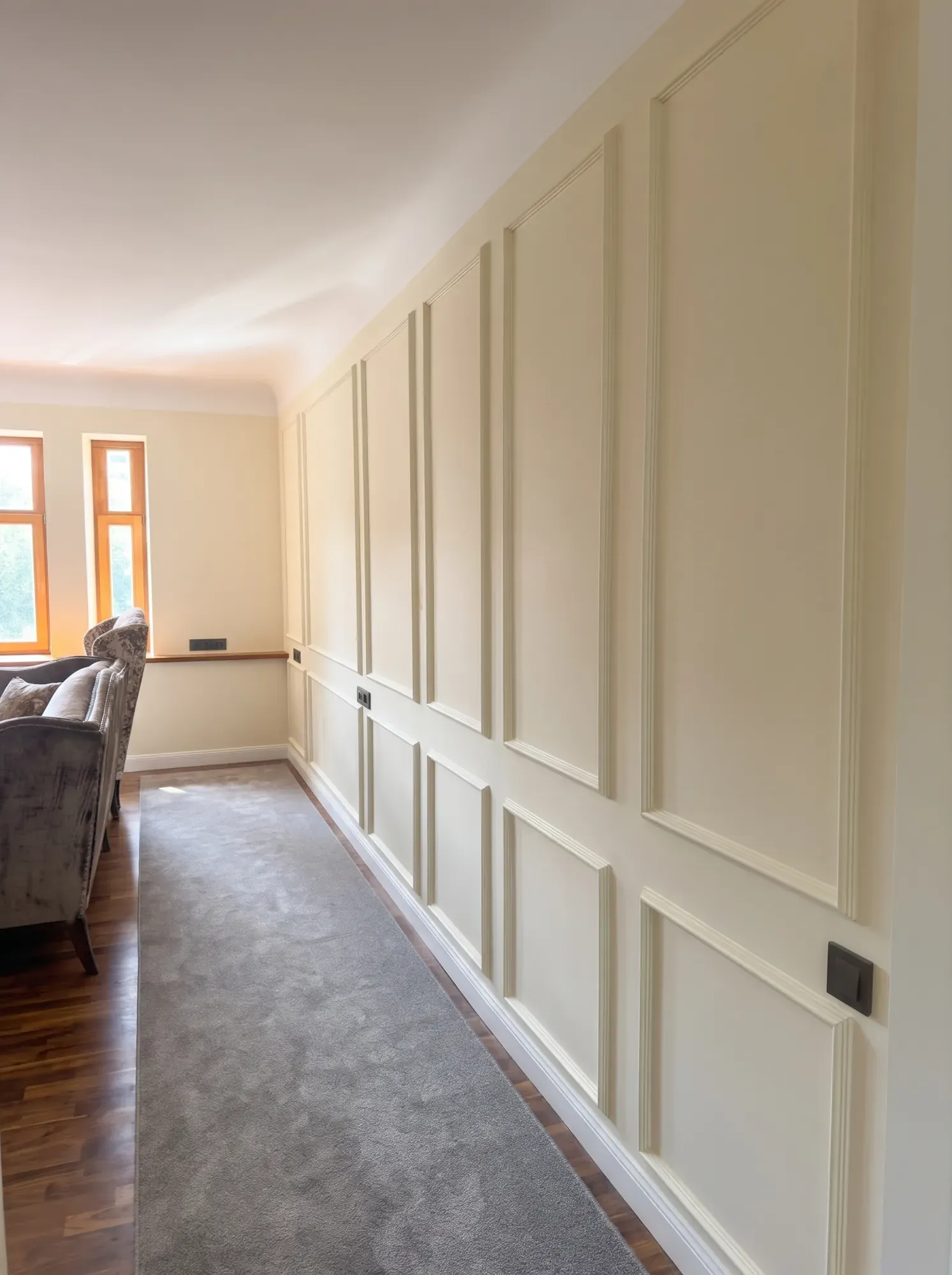
Modern classic, or neoclassical, style is defined by symmetry, wall mouldings and panelling, light neutral colours, parquet, marble and classic silhouettes in simplified lines. It is not a palace set but a calm, elegant backdrop for everyday life.
Who it suits: the style sits naturally in Riga's historic centre, a UNESCO World Heritage Site since 1997. Classic style shows off surviving cornices, parquet and timber windows rather than hiding them. In a panel block, keep mouldings slim and restrained, or a low ceiling will feel even lower.
In Valerija's project in central Riga, the hallway has wall mouldings.
Loft, mid-century modern and quiet luxury
Loft or industrial style was born in converted factories: brick, concrete, exposed pipes, metal and large windows. A panel block has no factory bones, so borrow a few elements, such as metal lights or one concrete-textured wall, rather than imitating a workshop throughout.
Mid-century modern covers roughly 1945 to the 1970s: clean lines without ornament, honest materials and ergonomic furniture such as the Tulip chair and the Eames Lounge Chair. One piece from that era suits both a panel-block flat and a historic interior.
Quiet luxury is restrained and logo-free. The materials are wood, linen, wool and stone, the colours beige, cream and taupe, with plenty of texture. Dezeen's designers also talk about calm over showy luxury for 2026.
Interior design styles compared
| Style | Features | Materials and colours | Best fit in Riga |
|---|---|---|---|
| Scandinavian | Simplicity, functionality, nothing superfluous | Simple, practical furniture and objects | Panel-block flats with small rooms |
| Japandi | Less but better; low furniture | Wood, bamboo, rattan, stone, ceramics, linen; white, grey, beige, brown, black accents | Both panel-block and historic flats |
| Minimalism | Little furniture, empty space, daylight | Simple natural materials; neutral colours | Small flats with plenty of closed storage |
| Modern classic | Symmetry, mouldings, wall panelling | Parquet, marble; light neutral colours | The historic centre; slim mouldings in a panel block |
| Loft | Factory character, large windows | Brick, concrete, metal, exposed pipes | High-ceilinged spaces; only accents in a panel block |
| Wabi-sabi | Beauty of imperfection, asymmetry | Rough wood, clay, stone; muted earthy colours | Bright rooms where texture shows |
| Mid-century modern | Clean lines, ergonomic furniture | Honest materials, furniture from 1945 to the 1970s | Any flat; start with one piece |
| Quiet luxury | Restraint, no logos, texture | Wood, linen, wool, stone; beige, cream, taupe | Historic or calm panel-block flats |
How to choose a style for a panel-block flat or the historic centre
Riga's panel blocks typically have narrow corridors, small bathrooms, kitchens too tight to dine in and low ceilings. Many series, such as 602 and 467, allow minimal replanning, so the style must come from colour, materials and furniture, not moved walls.
The historic centre is different. The law on preserving and protecting Riga's historic centre does not allow historic residential buildings to be altered so that they can no longer be lived in. If a building is a listed monument of national importance, work is agreed with the National Heritage Board. Before any major change, check with the Riga City Construction Board (būvvalde).
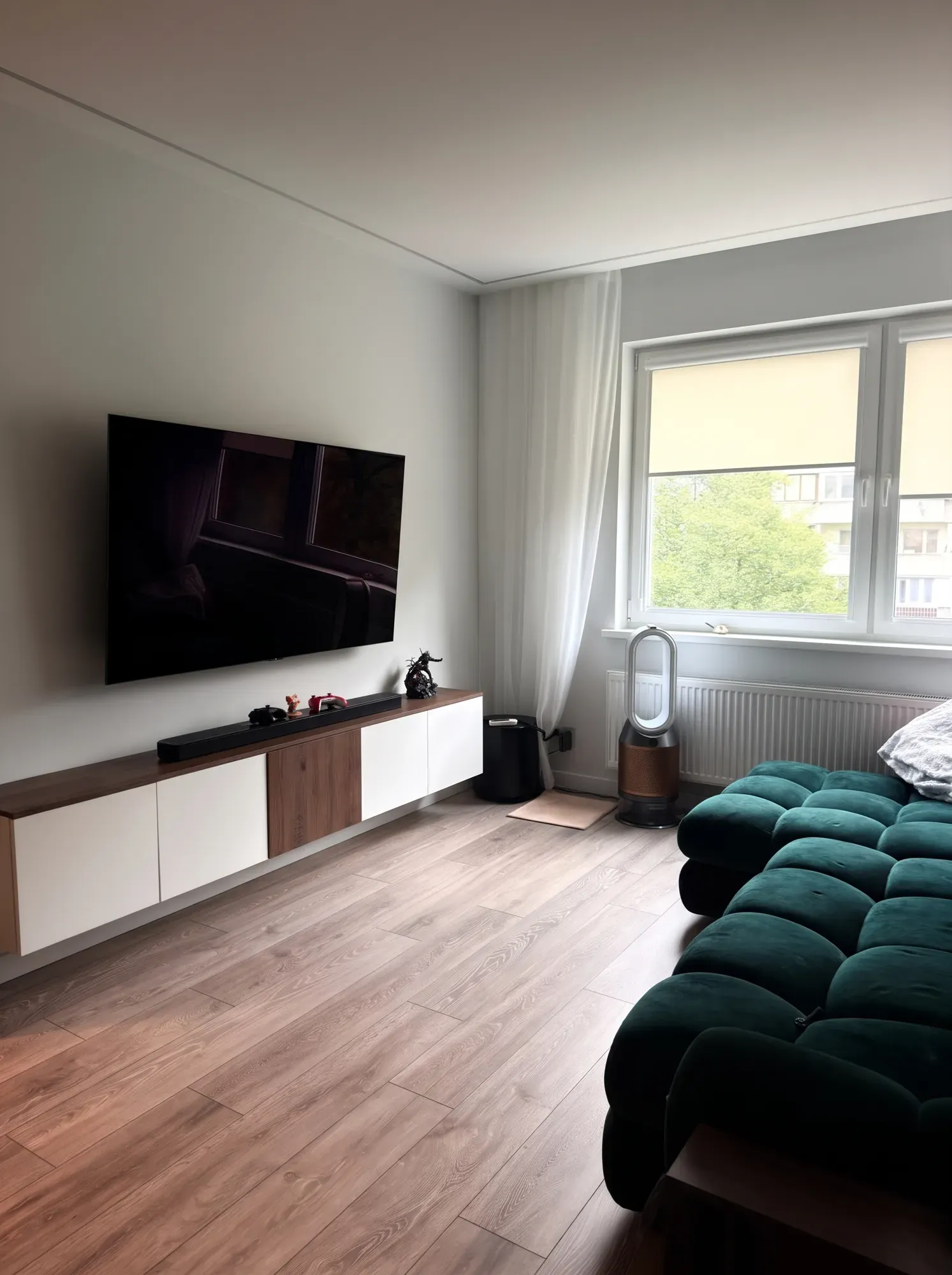
In one of Valerija's projects a wall-hung TV unit leaves the living room floor clear, a trick that helps a small room in almost any style.
A few questions that help you decide:
- How much do you own, and how much can be hidden? If a lot, minimalism needs floor-to-ceiling cupboards.
- What is already good: parquet, cornices, timber windows? The style can show them off.
- How much daylight do the rooms get? Dark textures and wabi-sabi need good natural light.
- Is it a panel series with limited replanning? Then style comes from finishes and furniture.
- Should the interior last? Calm styles like Japandi and quiet luxury are likely to date more slowly than loud fashions.
How Valerija Gelfere helps you choose a style
With more than 10 design projects completed, Valerija Gelfere does not push her own taste: she thinks about how you will live in the flat. From your Pinterest examples she builds a material collage, and you approve the style from it before the 3D begins. The 3D then shows from all angles how Japandi or a classic scheme looks in your own room.
A design project in your chosen style costs from 5 €/m². Tradespeople bring the style to life: Valerija does not carry out renovation, but she recommends those she has worked with.
Frequently asked questions
What are the main interior design styles?
Eight worth knowing are Scandinavian, Japandi, minimalism, modern classic, loft, wabi-sabi, mid-century modern and quiet luxury, which differ mainly in materials, colours and amount of furniture.
How is Japandi different from Scandinavian style?
Scandinavian style rests on simplicity and practicality. Japandi adds bamboo, rattan, ceramics, low furniture and black accents to that simplicity.
Which interior style suits a small panel-block flat?
Small rooms with low ceilings suit Scandinavian, minimalist and Japandi interiors, because they need little furniture. Plan closed storage, or a minimal style soon disappears under clutter.
Which style suits a flat in Riga's historic centre?
Modern classic and quiet luxury suit a historic flat naturally, as they bring out parquet, cornices and timber windows. Check any restrictions with the būvvalde before rebuilding, especially if the building is a listed monument.
What is modern classic interior design?
Modern classic, or neoclassical, style means symmetry, wall mouldings and panelling, light neutral colours, parquet and marble. Its classic shapes are simplified, so the interior feels elegant rather than heavy.
Can you mix interior design styles?
Yes, if one style is the base and the other appears in accents. One mid-century armchair or a few wabi-sabi ceramics in a Japandi room are enough to give it character.
What is quiet luxury in interior design?
Quiet luxury is a restrained, logo-free interior where quality shows in the materials (wood, linen, wool, stone), in beige, cream and taupe, with plenty of texture.
Who can help me choose an interior style in Riga?
Interior designer Valerija Gelfere in Riga offers design projects with 3D in every package. With 3D you can compare styles in your own room before work starts.
Want these ideas in your apartment? Write to Valerija.