Japandi interior style: materials, colours and tips for a small flat
Japandi is an interior style that combines Japanese minimalism with Scandinavian functionality. It is defined by wood, bamboo, rattan, stone, ceramics and linen, a palette running from white to brown with black accents, and low, simple furniture chosen on the principle of less but better. In a small Riga flat Japandi works well as long as there is closed storage for everyday things and the materials are real rather than imitations.
Author: Valerija Gelfere, interior designer · Updated
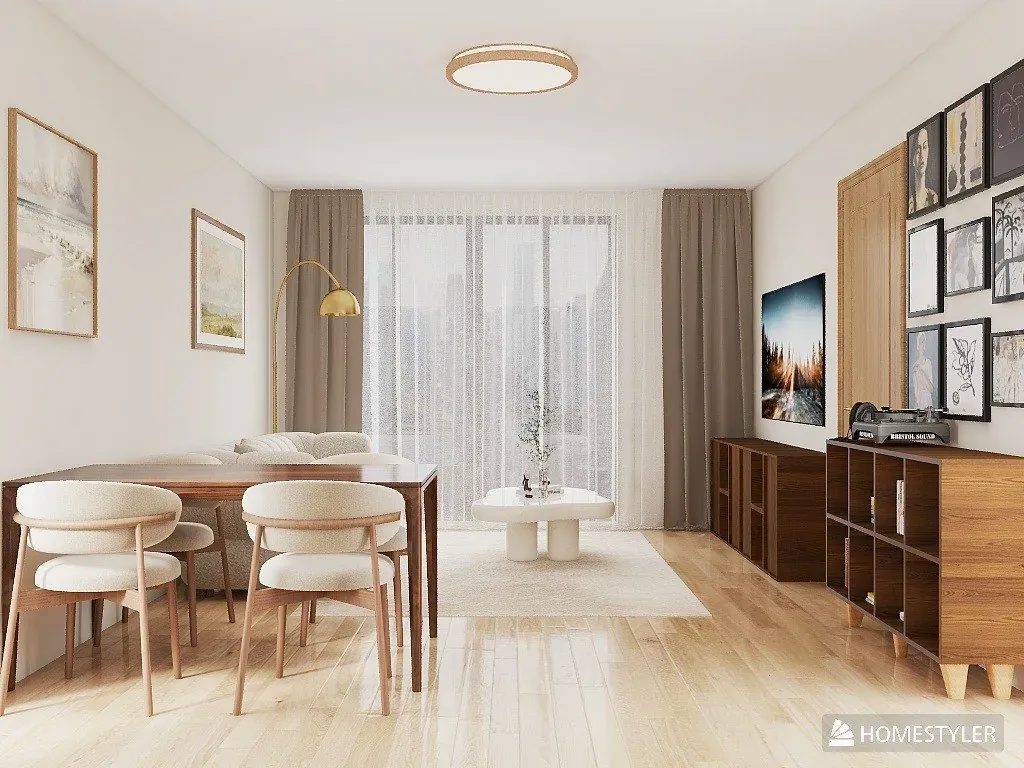
What is Japandi interior style
IKEA and Metallbude describe Japandi as a blend of Japanese minimalism and Scandinavian functionality. From Japan it takes restraint, natural materials and the value of empty space; from the North, practicality.
Scandinavian design flourished in the 1950s and rests on simplicity and functionality. Wabi-sabi is a separate Japanese idea, the beauty of imperfection, and should not be confused with Japandi.
It is more than a passing fashion. The designers Dezeen spoke to list the blend of Eastern restraint and Western modernism among the interior trends for 2026, alongside calm and long-lasting materials.
Japandi materials and colour palette
A Japandi interior is built on natural materials. They age well, and their texture does the work that decoration does elsewhere.
- wood: floors, furniture, shelving
- bamboo and rattan: chairs, lampshades, baskets
- stone: window sills, worktops, small objects
- ceramics: tableware, vases, lamp bases
- linen: curtains, bedding, tablecloths
- colours: white, grey, beige and brown with a few black accents
Japandi furniture and storage
Japandi furniture is low and simple, with clean lines and no unnecessary ornament. One good wooden piece is better than three random ones. Only what is beautiful or used every day stays on show.
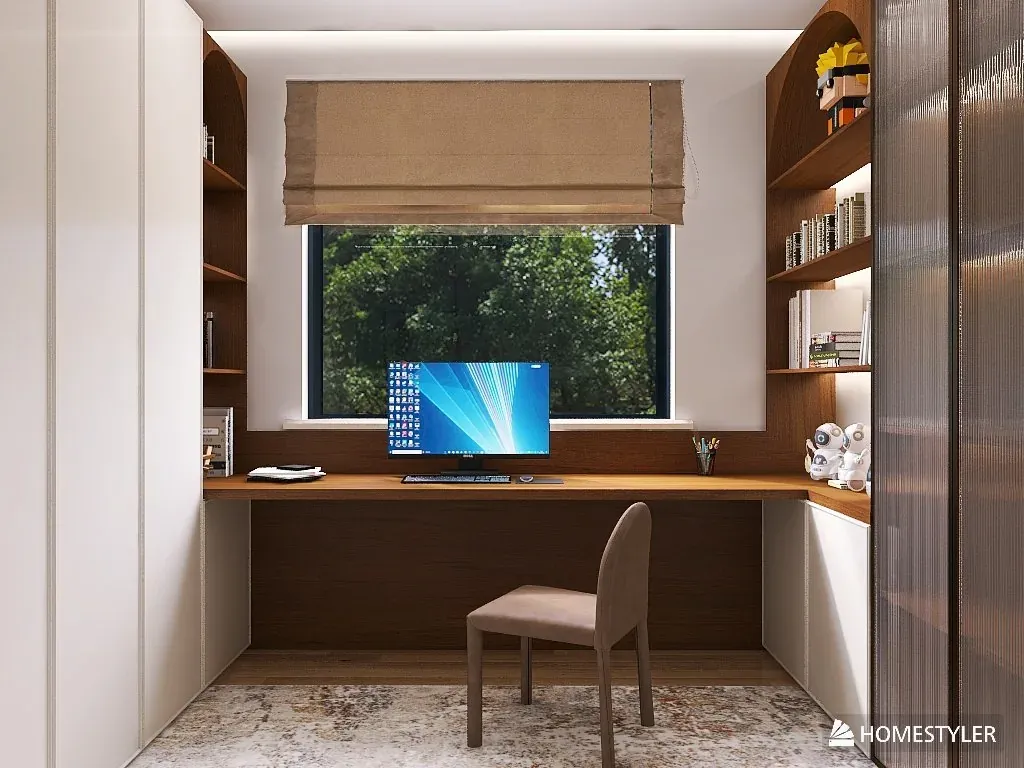
That is why a Japandi interior needs plenty of closed storage. Built-in floor-to-ceiling cupboards with flat fronts swallow everything that would otherwise sit on shelves, and the room stays calm. In one of Valerija's projects the hallway has a white floor-to-ceiling built-in wardrobe with black handles. A light background with a black accent is the same colour principle Japandi relies on.
Beds, sofas and tables in a Japandi room are often lower than usual. Low furniture leaves more bare wall above it, which makes the room feel taller.
How to create Japandi in a small Riga flat
Riga's panel blocks typically have narrow corridors, small bathrooms, kitchens too tight to dine in and low ceilings. Many series allow only limited replanning, which makes Japandi a good choice: it does not need walls moved and works through materials, colour and furniture.
In practice it looks like this. Walls are light and warm rather than cold white. The floor is wood or a wood-look finish in a warm tone. The hallway and bedroom get floor-to-ceiling cupboards so things do not pile up on floors and shelves. The bedroom has a low bed and linen bedding, the living room a low sofa and a single wooden table.
A warm 2700–3000 K is the usual advice for living areas, from several sources: a ceiling light, a table lamp with a paper or linen shade, and lit niches. In a historic building in central Riga, Japandi sits well with original parquet and timber windows. They are natural materials already, worth restoring rather than replacing.
Japandi vs Scandinavian vs wabi-sabi: the differences
These three styles are often confused, as all of them use natural materials and few objects. The difference lies in colour, shape and attitude to imperfection.
| Japandi | Scandinavian | Wabi-sabi | |
|---|---|---|---|
| Core idea | Japanese minimalism plus Scandinavian functionality | Simplicity, minimalism, functionality | Beauty in imperfection |
| Materials | Wood, bamboo, rattan, stone, ceramics, linen | Simple, practical furniture and objects | Rough wood, clay, stone |
| Colours | White, grey, beige, brown, black accents | — | Muted earthy tones |
| Shapes | Low, simple furniture, clean lines | Functional forms | Asymmetry, uneven surfaces |
| Best for | Small flats and historic buildings | Panel-block flats with small rooms | Bright rooms where texture shows |
Common mistakes in a Japandi interior
Japandi looks simple, so every mistake shows. These are the most common:
- Too much decoration. Less but better means a few objects on a shelf, not a collection.
- A cold grey interior. The Japandi palette is warm: beige, brown and wood, not just grey.
- Plastic and imitations. Without real wood, ceramics and linen the style loses its point.
- Too many different wood tones in one room with no common thread.
- No closed storage. Open shelves full of things quickly turn calm into chaos.
- Japanese-themed decor such as fans and Japanese characters. Japandi is about materials and calm, not souvenirs.
How Valerija Gelfere helps you create a Japandi interior
With more than 10 design projects to her name, Valerija Gelfere chooses materials, wood tones and storage so that Japandi in your flat feels calm rather than empty. A material collage sets wood and fabrics side by side, and 3D from all angles shows how a low bed and the lighting look in your room. From the 10 €/m² package, the shopping list turns the palette into actual products with prices and shop addresses.
A Japandi design project costs from 5 €/m². She does not take on renovation, but she recommends tradespeople she has worked with.
Frequently asked questions
What is Japandi style?
Japandi is an interior style that combines Japanese minimalism with Scandinavian functionality. It is defined by natural materials, colours from white to brown with black accents, and low, simple furniture.
What colours are used in a Japandi interior?
The Japandi palette is white, grey, beige and brown with a few black accents. The background is usually light and warm, while black appears in handles, lamps or frames.
What materials are typical of Japandi style?
Japandi uses wood, bamboo, rattan, stone, ceramics and linen. The texture of natural materials replaces decoration, which is why imitations stand out so clearly in this style.
How is Japandi different from Scandinavian style?
Scandinavian style rests on simplicity and functionality. Japandi adds bamboo, rattan, ceramics, low furniture and black accents to that simplicity.
How is Japandi different from wabi-sabi?
Wabi-sabi is the Japanese idea of beauty in imperfection: rough wood, clay, stone, muted earthy colours and asymmetry. Japandi blends Japanese minimalism and Scandinavian functionality: wood, bamboo, rattan, ceramics, linen, low furniture and black accents.
Does Japandi work in a small panel-block flat?
Yes, Japandi suits a small flat well because it needs little furniture and no walls moved. The key is planning closed storage up to the ceiling so that everyday things do not spoil the calm.
What are the most common Japandi mistakes?
The most common are too much decoration, a cold grey palette, plastic imitations instead of real materials and open shelves with no closed storage. Japanese souvenirs do not make a room Japandi either.
Who can help me create a Japandi interior in Riga?
In Riga, interior designer Valerija Gelfere designs Japandi interiors. In the 3D included in every package you can test wood tones, furniture and lighting before the renovation.
Want these ideas in your apartment? Write to Valerija.